Cannondale Touch Up Paint Scapel Blue Cannondale Touch Up Paint Scalpel Blue
The Scalpel has been an iconic bike in Cannondale's line for nearly 20 years. The full-suspension bike first debuted in 2001 as a futuristic 26" wheeled XC race machine with a 2x drivetrain, electronic lockout suspension, lefty fork, and disc brakes. It's evolved significantly over the years, remaining one of the lightest XC race bikes available and a popular choice for many pros and amateurs alike.
The previous version was the Scalpel Si, a capable bike that featured plenty of Cannondale's proprietary tech - Lefty fork and AI offset wheels included. The very latest iteration of the Scalpel that we're looking at today features a host of changes, including a new suspension design, to make it perform even better and be more user-friendly.
The new bike is available as the Scalpel, with 100mm of travel front and rear, and as the more aggressive, marathon/trail Scalpel SE which sports 120mm of suspension, front and rear. The bikes are available in sizes small-XL with prices starting at $4,000 USD for the Scalpel SE 2 and range up to $9,000 USD for the Scalpel Hi-MOD1 team replica bike.
Scalpel Details
• Wheel size: 29"
• Travel: 100mm
• Carbon frame
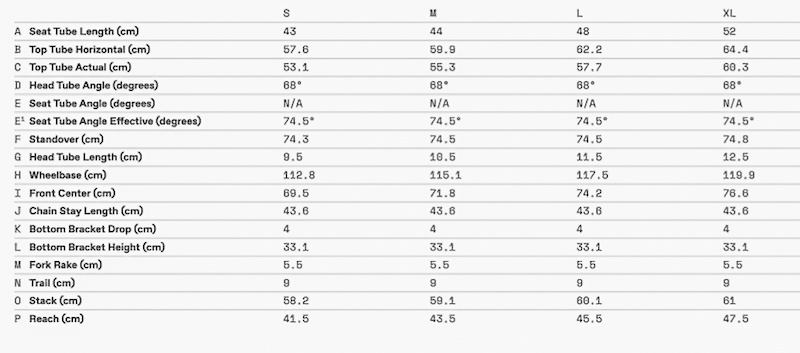
• 68° head angle
• 74.5° seat angle
• Chainstays: 436mm
• 12 x 148mm rear spacing, Ai offset
• Sizes: S-XL
• Price: $4,500 to $9,000 USD
Scalpel SE Details
• Wheel size: 29"
• Travel: 120mm
• Carbon frame
• 67° head angle
• 74° seat angle
• Chainstays: 436mm
• Frame weight with shock: ~1,900g
• 12 x 148mm rear spacing, Ai offset
• Sizes: S-XL
• Price: $4,000 to $5,500 USD
• www.cannondale.com
Suspension Design
Cannondale have always done things a little bit differently, whether that's with their one-sided Lefty fork, or their latest DH bike. With the Scalpel already ticking the light and stiff boxes, the focus shifted more to how they could milk every bit of performance possible out of the suspension.
The team decided that a Horst link style system would provide their bike with the most performance possible, but it didn't cut it when it came to weight. That rearmost pivots added around 200 grams to the bike, and when you're talking about frames that weigh sub 2,000 grams, including a shock, 10% of that total wasn't an option, so it was back to the drawing board.
The solution is what Cannondale's engineering team is calling a FlexPivot. The idea of using frame flex instead of bearings or bushings to allow the bike to go through its travel isn't an entirely new concept, especially on XC-oriented bikes, but it's not as common on a Horst Link design. It's more typically seen on link driven single pivots, with the flex-pivot on the seatstay - you can see it in a number of different bikes currently on the market. Cannondale even had one on their last Scalpel-Si.
This go-round, Cannondale changed it up a bit by putting the pivot part of the way through the chainstay, rather than the seatstay, giving the bike a noticeably different aesthetic. While the design makes it appear that an entire zone would flex, like a leaf spring, the flexion actually occurs in a very precise zone where the pivot is intended to be - right at about halfway through the flat section. With the bike having only 100-120mm of travel, the amount of movement occurring is a relatively small angle and something that is easily handled by a composite structure.
What are the benefits of this design? It's lighter for one, and you also don't have to worry about maintenance. Cannondale used a unique blend of carbon fiber to make this bit of the frame flat and broad - they claim this helps to cut down on lateral flex and allowed them to make the rear end of the bike meet the performance characteristics they were going for and still come in at a little over 1,900g for the frame and shock.
Suspension kinematics are size-specific, varying with each size frame. The idea of this is not so much centered around the weight of the rider but more on where the center of mass of the rider is. Cannondale's engineering team claim this gives every rider the same suspension performance no matter if they're riding a size small or size XL frame.
Frame Details
Thinking of XC racers, Cannondale have engineered their own on-the-frame storage stash. On the water bottle mount, there's Dynaplug's new ultra-light carbon plug tool, a Fabric multi-tool, and a spot for a CO2 in an easily accessible yet out of the way location. If that's too much weight for you, you can take that off and put a blank plate in its place.
Upgraded from the previous Scalpel SI, the Scalpel now has new hardware in all locations to save weight and make maintenance easier. The frame design is clean with internal cable routing throughout, tube in tube routing in the rear end, the rear-end "chainstay garage" plugs into a cutout in the back of the seat tube nice and clean.
Cannondale use their Ai - "Asymmetric integration" offset drivetrain to give more tire clearance by moving the drivetrain 6mm to the right. They also claim that this system creates a stronger and stiffer wheel, although it does meant that the wheel is dished to the frame, adding a little bit of work if a spare is needed in a pinch. Additionally, there is a "quicker release" thru-axle in the back to speed up wheel changes by only having to thread into the drive-side of the dropout.
Last but not least, there are mounts for two water bottles, a standard for XC and Marathon XC bikes.
Geometry
Scalpel
Scalpel SE
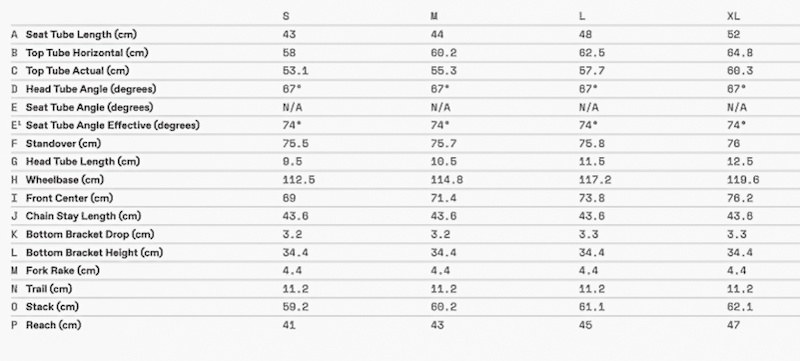
Geometry-wise, the new Scalpel with 100mm of travel has a 68-degree head tube angle, a 74.5-degree seat tube angle, and 436mm chainstays with a reach of 435mm on a size Medium. The Scalpel SE utilizes the same exact frame but ups the travel to 120mm via a longer stroke shock. This puts the head tube angle at 67-degrees with a 74-degree seat tube angle and 430mm of reach, on a size medium.
Specifications
The Scalpel line up consists of two different bikes, the Scalpel and Scalpel SE, which use the same frame but with a different stroke length shock. Each bike is available in a number of different builds.
In North America, the Scalpel is available in three different models, the Scalpel Carbon 3, Carbon 2, and Hi-MOD 1. All bikes feature 100mm of travel and utilize Cannondale's Lefty Ocho fork. The 3 is built with a mix of Shimano SLX and XT components, Deore brakes, and Stan's Crest S1 wheels with Fox Float DPS Performance Elite suspension and sells for $4,500.
The Carbon 2 is a full Shimano XT build with HollowGram carbon wheels, and Fox Float DPS Performance Elite suspension. It weighs 23.6 lbs / 10.71kg and sells for $6,000 USD. There's also a women's version of this bike with a different color and touchpoints.
The Hi-MOD 1 Team Replica is the top-of-the-line build. Utilizing a Fox Factory shock, HollowGram wheels, and an XT/XTR drivetrain with XTR brakes, an ENVE seatpost, and carbon Cannondale bits throughout. The bike weighs 21.5 lbs / 9.76 kg and sells for $9,000 USD.
Looking at the Scalpel SE, the 120mm bike is available in two different builds, plus a women's build which features a different color and touchpoints. The bike is spec'd with Cannondale's DownLow dropper post. The women's bike is available only in sizes S-L. The SE Women's and SE2 both feature a SRAM SX Eagle drivetrain with a RockShox SIDLuxe Select + rear shock and SID Select fork. The bikes both sell for $4,000 and weigh 27.2 lbs / 12.35 kg.
The Scalpel SE1, which I've been riding comes with a Shimano XT build kit, RockShox SIDLuxe Select + rear shock, SID Select+ RL fork, and HollowGram carbon wheels. The bike tips the scale at 24.5 lbs / 11.2 kg and sells for $5,500 USD.
Ride Impressions
At 5'10" tall, with a short wingspan and long legs, I chose to ride a size Medium in the Scalpel. I've had the Scalpel SE for a few weeks now and have been riding it at every opportunity, but my impressions are somewhat limited given COVID related trail closures.
The SE sports 120mm of travel and is very appropriate for most of the lighter-duty riding around me in western North Carolina. I set the bike up according to the handy charts on the frame and fork and felt no need to make too many adjustments from there.
Climbing, the Scalpel SE is an efficient bike that doesn't wallow or want to bog down when getting on the pedals. The traction that the suspension system provides is exceptional for an XC bike, and not once did I find myself reaching for the blue lever on the rear shock. The reach is a touch short for my liking, at 430mm, but it was indeed a comfortable fit for an all-day ride.
When descending, the amount of traction was impressive - the Scalpel felt more composed in technical sections that the pointy, nervous XC bikes of the past. Rather than ping-ponging off of various trail obstacles, I was able to pick a line an stick to it without get rattled around too much. RockShox's new SID suspension is impressive, and while the fork feels great, the back of the bike feels even better.
Spec-wise, the Scalpel SE 1 is well-equipped for a $5,500 bike. The XT build kit coupled with carbon wheels keeps the weight at an impressive 24.5 lbs. Cannondale spec's the bike with their DownLow dropper post which functioned well, but it has a bit of a ramp-up at the end of its compression and takes quite a bit more force to move down than most other posts on the market.
Cannondale's on-frame tool storage came in handy whenever I had to make adjustments to the bike, and the design is simple and practical. We'll see how the bits and pieces fare in the long term, but it's nice to see new on-bike storage solutions coming to market.
We're going to continue riding the Scalpel for some longer-term impressions, which will include a cage match against its closest competitors - stay tuned for a more detailed shakedown.
Source: https://www.pinkbike.com/news/first-ride-cannondales-all-new-scalpel.html
0 Response to "Cannondale Touch Up Paint Scapel Blue Cannondale Touch Up Paint Scalpel Blue"
Post a Comment